

I trained fasted for my entire thirties. All through my CrossFit years, up and straight into it, nothing but coffee.
And it wasn’t a fat loss thing. I want to be clear about that, because I think that’s what most people assume. I genuinely believed I didn’t need food. I thought I was more efficient without it. Faster, lighter, sharper on an empty stomach. That was the whole belief, and I never once questioned it.
I don’t train that way any more, and it’s one of the best changes I’ve made.
Here’s the short version, if you want it now: pre and post workout nutrition matters more than I ever gave it credit for. A little protein and some carbs before you train, and protein after, is most of it. If you’re training fasted and feeling flat, that’s your answer.
Here’s how I got there.
What Made Me Question My Pre-Workout Nutrition
It wasn’t research that changed my mind first. It was how I felt.
I started going flat partway through workouts. Not tired at the end, which is normal, but hollowed out in the middle of a session that should have been fine. Then I stopped recovering. I’d finish a workout and feel so fatigued that training again the next day felt impossible.
That was the bit that got me. I’ve always wanted to be the fittest, strongest, most capable version of myself. Not being able to back up a session was a real problem.
Around the same time I was deep in a research rabbit hole about perimenopause, trying to understand the symptoms I was having, and I heard Dr Stacy Sims talking about this exact thing on a podcast.
The Science Behind Pre and Post Workout Nutrition
Sims researches female physiology, and her position is blunt: women should train fed, not fasted.
The reason is cortisol. Women are far more sensitive to it than men are. Training on empty pushes cortisol up, and if your hormones are already shifting in perimenopause, that’s a stress on top of a stress. Instead of calmly burning fat, your body starts breaking down muscle for fuel. You train harder for less, and you recover worse.
Which was, in retrospect, a very accurate description of what was happening to me.
The other thing worth knowing: most of the “train hungry, train lean” advice we’ve all absorbed came from studies done on men. It was never written for us.
How I Changed My Pre and Post Workout Nutrition
I didn’t overhaul everything overnight. Like any habit I want to make stick, I started small.
First it was just a protein shake before training. That’s it. Low effort, easy to stomach first thing, and enough to test whether any of this was real.
It was. So I built on it. Now I eat a proper meal before I train: oats, protein powder and egg whites, and I have it about an hour before I start. The timing took some working out. Too close and it sits there, too far and you’re running on empty again anyway.
What Changed, and How Fast
Almost straight away. That surprised me. Once I got my pre and post workout nutrition sorted, everything else fell into place.
- Consistent energy through the whole workout. No more hitting a wall in the middle and wondering what was wrong with me.
- No crash afterwards. I used to finish a session and be wiped out. Now I don’t.
- Recovering about ten times better. Backing up sessions stopped being a battle.
- Stable energy for the rest of the day. Before, I’d spend the afternoon playing catch-up from being so depleted. That feeling just went.
Ten years of thinking I was fine, and the fix took a week.
What I Actually Eat: My Pre and Post Workout Nutrition Routine
This is where I’ll be honest rather than textbook.
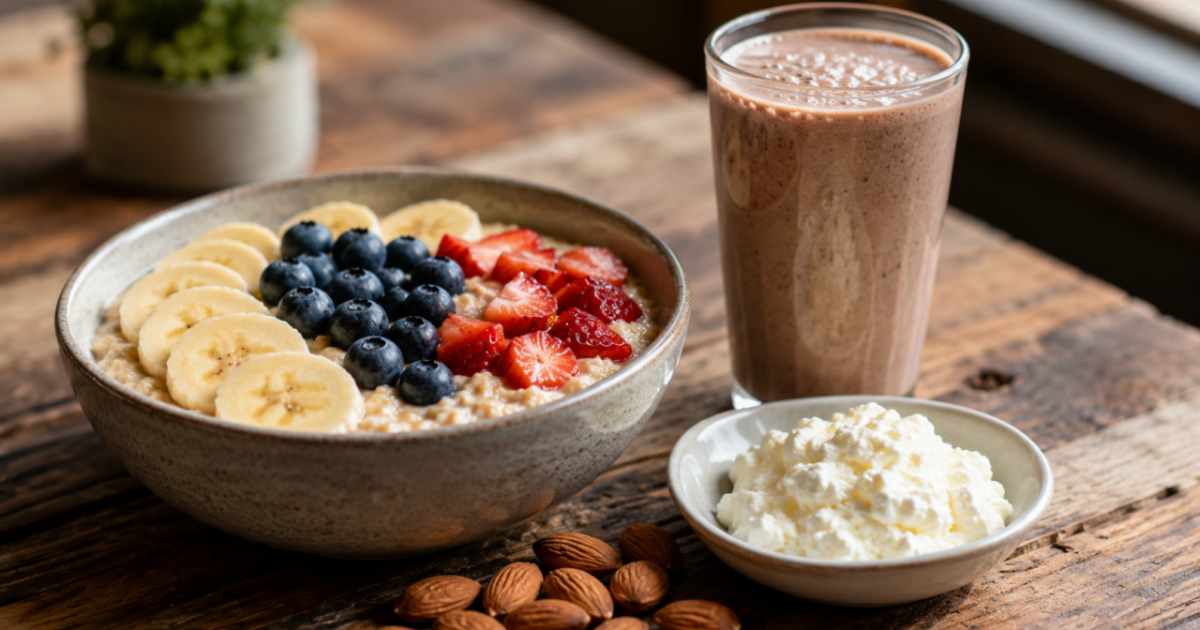
Before training: protein oats with frozen berries, every morning, about an hour before I train. In the week before my period, when I’m noticeably more carb hungry, I add a banana. I don’t fight that craving, it’s information. Cottage cheese on toast with a bit of warm jam is my other favourite. Sounds odd, tastes delicious.
After training: this is where I differ from the standard advice, and I’ll say so. Sims suggests around 30g of protein soon after training. I usually hit 15 to 20g in my first and second meals, and I deliberately save more of my protein for lunch and dinner. That works for me and my appetite. It might not be textbook perfect, but it’s what I can actually sustain, and sustainable beats perfect.
The general guide, if you want the numbers: around 15g of protein with some carbs before you train, and roughly 30g of protein afterwards. Use them as a direction, not a rule.

What I’d Tell You About Training Fasted
If you’d told me at 35 that I should eat before training, I’d have said what you’re probably thinking: I’m fine, I don’t need it.
I thought I was fine too. But looking back, I think I could have been a stronger, more athletic person if I’d actually fed myself and sorted my pre and post workout nutrition. That’s the part that stings a bit. And now, in my forties and going through perimenopause, I wouldn’t do it any other way.
So don’t take my word for it. Experiment. Try it for one week and see how you feel. Two things make or break it:
- Find food you can tolerate early. If the thought of oats at 6am makes you feel ill, don’t start there. Start with a shake, like I did.
- Timing is key. An hour before works for me. Find your own window.
One week. That’s all it takes to know if your pre and post workout nutrition needs to change.
What to Try Next
- Exercises for Menopause Belly Fat
- Cardio vs Strength Training Over 40
- Grab your free monthly workout calendar
Frequently Asked Questions About Pre and Post Workout Nutrition
Should women train fasted?
Generally no. Fasted training raises cortisol, and women are more sensitive to it than men, especially in perimenopause. Training fed helps protect your energy and your muscle. You don’t need a big meal, just something. Getting your pre and post workout nutrition sorted early makes the biggest difference.
What should I eat before a workout?
Around 15g of protein with some carbs is a good guide. I have protein oats with berries about an hour before. A protein shake, yoghurt with fruit, or cottage cheese on toast all work too.
How long before a workout should I eat?
I eat about an hour before, which gives me time to digest without running out of fuel. If you’re having something smaller like a shake, you can go closer.
What should I eat after a workout?
The general guide is around 30g of protein with some carbs. Personally I have 15 to 20g and save more protein for lunch and dinner, because that’s what suits my appetite.
How quickly will I notice a difference?
I felt it almost immediately, within the first session or two. Give it one week of eating before you train and see how your energy holds up.
What if I can’t eat first thing in the morning?
Start with a liquid. A protein shake is far easier to get down at 6am than food, and it’s exactly how I started before working up to a full meal.
Do I have to count calories or macros?
No. Get protein into your meals and eat enough to support your training. Simple and consistent beats precise and unsustainable. Focus on the basics of pre and post workout nutrition instead.
Give it a week. I’d love to know how you go.
Penny x
About the Author
Penny Barnshaw is the founder of Garage Fitness Girl, where she’s built a community of over 230,000 women training for strength over 40. She’s 46, in perimenopause, and figuring it out alongside everyone else. Energised, not exhausted.